Deepwater Petroleum Systems in Nigeria: Their Identification and Characterization Ahead of the Drill Bit Using SGE Technology
IBC Nigeria Energy Summit, London, June 15-16, 1999
Authors
- Nick R. Cameron (United Kingdom representative for TDI-Brooks International, Inc. and GeoMark Research, Inc.),
- James M. Brooks (TDI-Brooks International, Inc.) and
- John E. Zumberge (GeoMark Research, Inc.)
Abstract
In frontier basin exploration SGE (Surface Geochemical Exploration) technology provides the only means of investigating ahead of the drill bit the nature and extent of Petroleum Systems. To determine the source rock characteristics of deepwater Nigeria, a total of 358 piston-core samples were acquired in 1996 and 1998 for multiclient consortia. 112 heatflow determinations were also made in 1998. Seismic shot by Mabon Limited was used for site selection. 82 (22.9%) of the cores yielded above background values of migrant hydrocarbons. Eleven (3.1%) of the cores contained sufficient macroseep (certain) or microseep (probable) oil to permit geochemical typing. These success rates were more than sufficient to type the deepwater Petroleum Systems, confirm the region’s potential, and to enable companies to introduce reliable source rock quality and maturity parameters to their risk models.
Introduction
In deepwater exploration a crucial, and arguably the most critical single issue, is whether oil has been generated, and if it has, what can be determined, before making costly decisions, regarding the quality, maturity and the age of the source succession. With the choicest deepwater acreage continuing to attract large signature bonuses and with wells in some cases costing in excess of $US 50 million, a reliable means of assessing source rock risk is required.
Whilst trap geometry details and reservoir horizons can be predicted from seismic with increasing degrees of confidence, no fail proof method exists for remotely predicting the composition of reservoir fluids and gases. AVO theory provides some degree of control, but continuing dry holes show that serious interpretational issues persist. Fortunately, since oil and gas accumulations are invariably leaky, Surface Geochemical Exploration (SGE) can be used to recover and type migrant hydrocarbons before committing to either blocks or wells. The goal is to initially high-grade open acreage and subsequently rank prospects by means of gas and high molecular weight hydrocarbon screening of piston-cored samples. Heatflow surveys and the collection of geological samples for age, source quality (Total Organic Carbon, etc.) and maturity determinations (Tmax etc.) are also permitted, together with a wide variety of geotechnical programmes.
Discussion
The source rock geology of deepwater Nigeria
Most deepwater Petroleum Systems, such as those in Angola and the Campos Basin of Brazil, are associated with the incoming of expanded section oceanwards of shelf edge hinge lines and the appearance of source horizons not present in shallow water or onshore settings. Deepwater Nigeria differs from the standard setting in that the sedimentary supply of the combined Niger and Benue Rivers has been sufficient to extend the Niger Delta far to the south and west of the initial shelf edge (basin margin) hinge lines and out across previously deepwater environments. Thus, unlike Angola (Cameron et al., 1998), the source section below the present day deepwater contains the same units as those lying below the base of the delta (there is no evidence in the South and Equatorial Atlantic that the quality of individual deepwater source horizons varies with depositional water depths).
The resulting geological framework of the Niger Delta is illustrated on Figure 1. The deepwater blocks and the most important discovery well locations are included, as is the Zafiro Complex in Equatorial Guinea. An averaged cross-section for the Delta is presented on Figure 2. This runs from the basin margin SSW through the producing region out to the deepwater frontier. Both figures focus on how the modern delta has overrun, since its initiation in the Eocene, the Cretaceous shelf edge hinge line.
Though oil prone, Aptian aged source rocks have been eloquently argued by Frost (1997) to floor the onshore Niger Delta and the deepwater regions, the geochemical evidence suggests that late Cretaceous (Iabe equivalent) and, more especially, Tertiary sources predominate (Haack et al., 1997; Stephens et al., 1997; and Haack et al., 1998). The late Cretaceous source section is shown on Figure 2, as is the source section within the older Tertiary Akata Formation. Both these sources are oil prone. Localised, mixed oil and gas prone source rocks are also present onshore and nearshore within the Agbada Formation. This unit consists of shallow water marine to non-marine sediments related to the advance of the delta top to the south and west. The delta top succession comprises the Benin Formation.
Beneath the onshore and nearshore portions of the Delta, the Cretaceous, and probably all of the older Tertiary sources, are, because of the thickness of the cover section, within the gas generation window. As the thickness of progradational cover decreases oceanwards, initially the Tertiary and subsequently the late Cretaceous section will become immature. The objective of SGE in this case is to determine the regions where these source horizons are in the oil window. Fortunately, the oils from Cretaceous, older Tertiary and younger Tertiary sources can readily be characterised by biomarker analysis. Once typing is available, the play options can be readily determined from the seismic and through basin modelling. For example, direct migration from older Tertiary source rocks into downcutting sand channels and lobes may be possible. In others cases, fault conduits from the source horizon to the reservoir will be required, especially for the late Cretaceous section.
Thomas (1995), Doust and Omatsola (1990), Lauferts (1998) and Skaloud and Cassidy (1998) should be referred to for additional information on the petroleum geology and for accounts of the items included for completeness on Figures 1 and 2, but not discussed here. Thomas (1995) and his subsequent four papers in the Oil and Gas Journal, together with Doust and Omatsola (1990), provide additional references.
The methodology
The piston-coring procedures and laboratory techniques to be described are those practised by TDI-Brooks International, Inc. The samples were collected using the company’s vessel, the R/V GLORITA. The procedural and geochemical observations are based on the work of B&B Laboratories (Bernard, 1999) and GeoMark Research, Inc. The presented methodology is equally applicable to mature basin studies, for example the nearshore fields of Nigeria.
Selecting targets
Core sites are chosen by TDI-BI and/or participant companies, usually from regional 2-D seismic lines. Seismic acquired by Mabon Limited was used for both the 1996 and 1998 programmes. Enhanced selection is permitted where 3-D seismic and/or swath bathymetry is available. An excellent illustration of the additional return from 3-D data is provided by Haskell et al. (1999) who include TDI-BI piston-core locations on time slices from deepwater Nigeria.
The optimum targets are deep cutting faults that link the source succession to the seabed. These are best developed where there is ongoing tectonism, for example in the clay diapir province. However, even in tectonically quiet regions breaks are usually present, especially where the section is thick and/or where there has been differential movement and reactivation across basement features such the Benue and Charcot Fracture Zones. The ideal faults are those associated with: (1) amplitude anomalies (“flags”) and/or Bottom Simulating Reflectors (BSRs) associated with gas hydrates, (2) seabed constructional features such as carbonate accumulations and mud-gas mounds, (3) gas vent pits and (4) thermogenic gas chimneys. Figure 3 illustrates a typical site, this one is positioned on an active sea bed feature associated with a shale diapir. Further information on the geology of seeps and slicks (the sea surface manifestation of a seep) may be found in MacDonald (1998).
Acquiring piston-cores
Core sites are positioned with differential GPS positioning to a precision of ± 5 metres generally within ± 30 metres of pre-selected locations. Precision bathymetric and subbottom (3.5 kHz or Chirp sonar) profiling is used to further refine core positions in the field.
Cores are acquired with a heavy-duty, 2000 lb. piston-corer with a collapsible piston and six metres of pipe plus core liner. Although a more expensive technique, piston-coring offers several advantages over gravity coring, including: (1) greater penetration depths, (2) better core recovery, and (3) higher quality (less disturbed) samples. Using piston- coring to sample depths of up to six metres significantly reduces intracore variability due to bioturbation, loss by near surface diffusion of gases, and mixing of natural hydrocarbon seepage or pollution in the top metre of sea floor sediments. The length of section allows three sections from each piston-core to be analysed and depth trends for measured parameters to be reliably determined and evaluated.
The GLORITA’s normal operational window is water depths between 10-3000 metres. Sampling to depths of up to 4500 metres is possible, but the core acquisition rate is much lower than the 8-10 cores/day regularly achieved for shallower depths.
After retrieval on deck, the cores are processed in the laboratory on the R/V GLORITA. Following logging, the samples are immediately frozen (-20° C) for dispatch by airfreight to the United States for detailed analysis.
Surface Geochemical Exploration screening procedures
A three stage investigative procedure is used for examining piston-cores for migrant, thermally sourced oils and gases. The first stage is the visual examination of the cores on site for oil staining and related phenomena. Hydrocarbons are suspected when dark stained section is present or gas expansion pockets and authigenic carbonates are observed. However, visually obvious oil staining is not always present. In some cases, dark, oil-like staining and fluids are found by the subsequent testing procedures not to be of thermal origin. Gas hydrates have been recovered by TDI-BI from the Niger Delta. Their habitat is described by Cunningham et al., 1997.
Upon receipt in the United States, the frozen cores are sectioned into three portions for the second investigative phase. This is handled entirely by TDI-BI. Three analytical procedures are utilised: (1) the total scanning fluorescence intensities of sediment extracts, (2) the C15+ hydrocarbons by gas chromatography in the sediment extracts, and (3) the light hydrocarbons in separately canned sediment sections by headspace extraction and gas chromatography.
The third and final stage comprises GC-MS studies by GeoMark Research Inc. for those samples where one or more of the TDI-BI screening procedures indicates the presence of oil. Here the objectives are also threefold: (1) to confirm the occurrence of oil, (2) characterise in terms of biomarkers the nature of the source rock supplying the oil, and (3) to determine in more detail the maturity of the oil.
Figure 1 includes the locations of the non-propriety cores collected in Nigeria by TDI-BI. 130 of the total of 358 cores were obtained in 1996. The remaining 228 were cut in 1998.
Total scanning fluorescence (TSF)
TSF provides semi-quantitative measures of petroleum-related aromatic hydrocarbons. Increasing TSF intensity (expressed in arbitrary units) generally corresponds to enhanced aromatic hydrocarbon concentrations in the sediment extracts. Migrant oil samples contain a higher concentration of larger aromatic compounds (3 or more benzene rings) and fluoresce at longer wavelengths, whereas, extracts containing upward-migrated gas or condensate fluoresce at shorter wavelengths. TSF patterns are insensitive to bacterial alteration, except in the most severely situations. Additional information on TSF methodology is provided by Brooks et al. (1986).
82 (23%) of the 358 cores yielded TSF readings greater than the background of 10,000 units. In some cases, more than one interval in a core supplied above background readings. Nineteen (5.3%) of the cores contained in excess of 100,000 units and twelve (3.4%) more than 1,000,000 units. The peak value was 80,000,000 units. Subsequent analysis found that all the samples containing in excess of 1,000,000 units were collected from seep locations. Figure 4 compares the spectral features of background material with a sample proven by gc-ms analysis to contain oil.
Gas chromatography
Gas chromatography provides a separate means of detecting and characterising petroleum-related hydrocarbons. The output, the gas chromatogram, is a plot on which the vertical axis records abundances and the horizontal axis positions the hydrocarbon components of the sample. Background samples produce a flat basal trace with scattered peaks unrelated to thermogenic products. Fresh oil, which is only rarely recovered from seabed settings, is characterised by a regular train of peaks all related to known thermogenic products and which rise from a flat baseline. Most of these peaks are formed by alkanes (normal paraffins). They, together with lesser components, such as pristane and phytane, are used to study the origin and maturity of the source succession (Brooks et al., 1986).
Almost all seabed oils are moderately to severely modified by bacterial attack. In a few cases, sufficient alkanes and related compounds remain to demonstrate the thermogenic origin of the sample. However, in most examples all the molecular components of the oil are lost and the sample acquires properties akin to modern seabed organic matter.
The process of bacterial attack is termed biodegradation. Biodegraded oils are characterised by the increasingly “moth-eaten” appearance of the alkane peaks and the appearance of a pronounced hump below the initially flat base of the trace. The hump represents the by-products from the bacterial attack. These are termed the Unresolved Complex Mixture or UCM. Hump amounts of greater than 100 m g/g (1996 survey) and 50 m g/g (1998 survey) were found to be statistically anomalous. Sixteen samples (4.4%) fell into this category. Ten cores (2.8%) contained in excess of 1000 m g/g UCM, all of which were found to be associated with oil. The peak value was just over 11,000 m g/g. Figure 5 presents an example of gas chromatograms for: (1) a background sample and (2) a severely biodegraded oil. Gc-ms analysis (see below) was used to determine the origin of the oil.
Headspace gas analysis
Headspace gas analysis relates to the determination of interstitial light hydrocarbon gases. Various gas parameters such as total alkanes, total non-methane alkane gases (C2+) and ethane/ethene ratios are used to separate thermogenic from biogenic gas seepages. Methane can be thermal or bacterial origin. Ethane is a stable thermogenic product, ethene is formed by bacterial fermentation and does not persist at depth. Statistically an ethane/ethene ratio of greater than 10:1 was found to be anomalous. 3.6% of the samples fell into this category. Eight samples (2.2% of the total) had an ethane/ethene ratio >100 and two had ratios in excess of 1000.
Sometimes gas ratios and the resulting plots can identify areas of thermogenic seepage that are not evident in the previously mentioned high molecular weight hydrocarbon measurements. Eight samples (2.2%) had ethane/ethene ratios of greater than 10:1, but no related TSF or UCM anomalies. All but two had associated methane anomalies.
As shown on Figure 6, most of the anomalous ethane/ethene ratios tie with migrant oils. The less pronounced ethane/ethene peak in the central region of the plot could be associated with migrant thermogenic gas.
Biomarker analysis
Biomarkers are organic molecules whose chemistry is specific to life. Most originate from the thermal degradation of bacteria, algae and vegetal debris. The resulting biomarker suites are diagnostic, provided that a sample is either not too severely affected by biodegradation by bacterial action or is a condensate, of the depositional setting of source rocks, their relative thermal maturity, and, in some cases, the geological age of the source. For the Nigerian region, the increasing abundance with time of the biomarker, oleanane, is used to separate younger Tertiary (Neogene), older Tertiary (Palaeogene) and younger Cretaceous marine sources. Oleanane is derived principally from flowering plants (angiosperms) whose abundance increased steadily from mid-Cretaceous (Albian) times. Biomarkers are analysed by Gas Chromatography-Mass Spectrometry (gc-ms). In this technique, a mass spectrometer is used to split the biomarker portion of a gas chromatograph’s output into diagnostic molecular fragments.
On the basis of the TDI-BI results, twenty-four (6.7%) samples were analysed for biomarkers. A total of eleven (3.1%) samples were found to contain oil. Nine (2.5%) of these contained definite oil, two others (0.6%) contained probable oil. The remaining thirteen samples were deemed not to contain thermogenic products, though the possibility exists that they may once have been oils. Locations containing confirmed oil are termed macroseeps, locations containing probable oil are termed microseeps.
The macroseep and microseep samples contained sufficient biomarkers to allow them to be readily typed to their source rocks. It was also possible to compare the samples with oils from producing fields. This in turn permitted enhanced regional understanding relating to source rock facies variations and oil maturities. As an example of this type of work, Figure 7 compares the gc-ms trace of a macroseep oil with produced oil from a field. In this case, a common Tertiary source is indicated by the enhanced amounts of the biomarker oleanane. Bacteria have attacked the piston-core oil and many of the peaks on the right hand portion of the trace represent remnants of the original biomarkers. In addition, new peaks, labelled with stars (*), have appeared in the field occupied in fresh oils by biomarkers known as pentacyclic terpanes – the starred peaks are related to seabed products. Fortunately, the left portion of the trace, which is occupied by biomarker compounds unpalatable to bacteria and known as the tricyclic terpanes, has not been affected. The pattern of the tricyclic peaks indicates derivation from a marine claystone containing terrestrially derived detritus. More on this subject may be found in Brooks et al. (1986).
Multivariant statistics
Multivariant statistics provide a powerful means of compiling Oil Families from suites of biomarker environmentally diagnostic components that best explain the geological variation in the data. The effectiveness of this approach is illustrated on Figure 8, which presents a cluster analysis dendrogram prepared by Schiefelbein et al. (1999) for a GeoMark oils set from the South Atlantic region. The Niger Delta area oils fall within the Tertiary Deltaic Family. These are statistically disparate from the marine Cretaceous sources and also the Cretaceous lacustrine oils that are so important further south in West Africa and Brazil. Figure 9 illustrates from the same reference the geographic extent of the Oil Families. Many of the Cretaceous and older Tertiary marine sources are richly oil prone and since they are regional in their extent they will generate hydrocarbons wherever there is sufficient cover for maturity. This is one of the major attractions of deepwater Nigeria.
Cost benefits
Given the necessity of mobilizing an ocean going vessel and operating safely and efficiently in remote settings, the cost of mounting piston-core surveys approaches those of seismic operations. As each core requires to be treated as potentially hydrocarbon bearing at all stages of the TDI-BI screening programme, the total cost of acquisition and analysis varies from $3,000 to $5,000/core. At the previously presented 3.1% success rate for geochemically typed oils, each success or “hit” will cost on average between $100,000 and $160,000. However, the layer cake nature of the deepwater source section in Nigeria means that only one deepwater seep or slick requires to be satisfactorily environmentally and thermally typed to position on seismic the Cretaceous and Tertiary oil windows. Multiple oil “hits” and the availability of oil analyses from wells permit the source risk to be further refined through the supply of corroborative detail. Finally, the TDI-BI screening results supply the local detail and linkage to the AVO signatures. As a visual reminder of just how important a single “hit” in a frontier basin can be, a deepwater Nigerian macroseep success is illustrated in Figure 10.
Selecting sites for heatflow programmes
Of at least equal importance to the previously described SGE work in deepwater exploration evaluations is the determination of heatflow. Unless reference DSDP (Deep Sea Drilling Project) sites are present, the information needed to control basin models is not available until the first wells have been drilled. The maturity and origin of a recovered oil provides clues to the heatflow, but since biodegradation frequently affects the biomarker ratios used for maturity studies, direct determinations of heatflow at the pre-bid stage are highly desirable.
Heatflow information is obtained by implanting up to eleven outrigger-style thermistors along the core barrel: eight sediment thermistors and one water bottom thermistor were used for the Nigeria survey. Temperature measurements are recorded in-situ using a digital thermograd. Ambient temperatures below the seabed are derived by tracking for ten minutes the heat decay induced by the frictional energy of the core barrel and mathematically projecting the resulting decline curve to infinity. A known heat pulse is then applied to the thermisters enabling the conductivity of each section to be calculated using an identical ten minute sampling procedure. Heatflow (HF) is determined by combining the site thermal conductivity (k) with the geothermal gradient (G) determined from the thermistors according to the relationship HF = kG. Water depth is measured by pressure and the angle of tilt of the core barrel is monitored to obtain true vertical depths. More information on the methodology is provided by Wright and Owen (1989). Heatflow measurements are possible in water depths of up to 6000 metres.
112 heatflow determinations were made in 1998 in water depths up to 3350 metres. Heatflow was found to vary between 19 and 124 mW/m2.
Once criticism of the technique is that the six metre maximum penetration may not permit measurements below the water saturated bottom coating oozes so commonly seen on seismic. This problem can be minimised by selecting sites from the seismic where these oozes are of minimal thickness such as on the crests of an active shale diapir or along the walls of fault scarps. During the later stages of exploration, direct well becomes possible.
References
- Bernard B. B., 1999. Core Sampling – Summary Methodology. B&B Laboratories, Inc., pp. 20.
- Brooks J.M., M.C. Kennicutt II and B.D. Carey Jr., 1986, Offshore surface geochemical exploration. Oil and Gas Journal, 20 October, pp. 6.
- Cameron N.R., C.F. Schiefelbein, J.M. Brooks and M.G.P. Brandão, 1998. The application of seabed sampling and organic geochemistry to frontier basin exploration in Angola, 3rd Annual Forum Worldwide Deepwater Technologies, London, 17-18 February 1998, pp. 8.
- Cunningham R., R.M. Lindholm and J.E. Holl, 1997. Constraints on gas hydrate formation, offshore West Africa. Hedberg Research Symposium, “Petroleum Systems of the South Atlantic Margin”, Rio de Janeiro, 16-19 November, extended abstract.
- Doust H. and E. Omatsola, 1990. Niger Delta. American Association of Petroleum Geologists, Memoir No. 48, p. 201-238.
- Frost B.R., 1997. Structure and facies development in the Niger Delta. Hedberg Research Symposium, “Petroleum Systems of the South Atlantic Margin”, Rio de Janeiro, 16-19 November, extended abstract.
- Haack R.C., P. Sundaraman, and J. Dahl, 1997. Niger Delta Petroleum System. Hedberg Research Symposium, “Petroleum Systems of the South Atlantic Margin”, Rio de Janeiro, 16-19 November, extended abstract.
- Haack R.C., P. Sundararaman, J.O. Diedjomahor, N.J. Gant and J. Dahl, 1998. Niger Delta Petroleum Systems. Extended Abstracts Volume. 1998 AAPG International Conference and Exhibition, November 8-11, 1998 Rio de Janeiro, p. 936-937.
- Haskell N., S. Nissen, M. Hughes, J. Grindhaug, S. Dhanani, J. Kantorowicz, L. Antrim, M. Cubanski, R. Nataraj, M. Schilly and S. Wigger, 1999. Delineation of geologic drilling hazards using 3-D seismic attributes. The Leading Edge, 18, 3, p. 373-374, 376, 378, and 381-382.
- Hutchison I. and T. Owen, 1989. A microprocessor heat flow probe. In: Handbook of Seafloor Heat Flow. J.A. Wright and K.E. Louden (editors), CRC Press, Baton Rouge, USA.
- Lauferts H., 1998. Deep offshore West Niger Delta slope, Nigeria – scale and geometries in seismic and outcrop indicating mechanisms for deposition. Extended Abstracts Volume. 1998 AAPG International Conference and Exhibition, November 8-11, 1998 Rio de Janeiro, p. 18-19.
- MacDonald I.R., 1998. Natural Oil Spills. Scientific American, November 1998, p. 31-35.
- Schiefelbein C.F., J.E. Zumberge, N.R. Cameron and S.W. Brown, 1999. Petroleum Systems in the South Atlantic Margin. In: Cameron N.R., R.H. Bate, and V.S. Clure (editors). The Oil and Gas Habitats of the South Atlantic. Special Publication of the Geological Society No. 153, p. 169-180 (available in July).
- Skaloud D.K. and P. Cassidy, 1998. Exploration of the Bonga and Ngolo features in the Nigeria deepwater. Extended Abstracts Volume. 1998 AAPG International Conference and Exhibition, November 8-11, 1998 Rio de Janeiro, p. 286-287.
- Stephens A.R., S.B. Famakinwa and G.D. Monson, 1997. Structural evolution of the eastern Niger Delta and associated Petroleum Systems of western offshore Bioko Island, Equatorial Guinea. Hedberg Research Symposium, “Petroleum Systems of the South Atlantic Margin”, Rio de Janeiro, 16-19 November, extended abstract.
- Thomas D., 1995. Exploration gaps exist in Nigeria’s prolific delta. Oil and Gas Journal, October 30, p. 66-71.
Acknowledgements
We wish to thank Mabon Limited for permission to include a section of one of their seismic lines. Energy Information Services Ltd. (EIS) supplied the locations for the 1999 discovery wells.
Further information relating to the 1996 and 1998 work programmes may be obtained from:
TDI-Brooks international, Inc: Dr. Jim Brooks, +1-409-695-3634 (telephone),
+1-409-695-5168 (fax), or <Drjmbrooks@aol.com>
GeoMark Research, Inc: Dr. John Zumberge, +1-281-856-9333 (telephone),
+1-281-856-2987 (fax), or <biomarkers@aol.com>.
UK time zone queries may be directed to Nick Cameron on: +44-(0)-1494-776850 (telephone/fax) or <nick@topaz.primex.co.uk>.
Figures
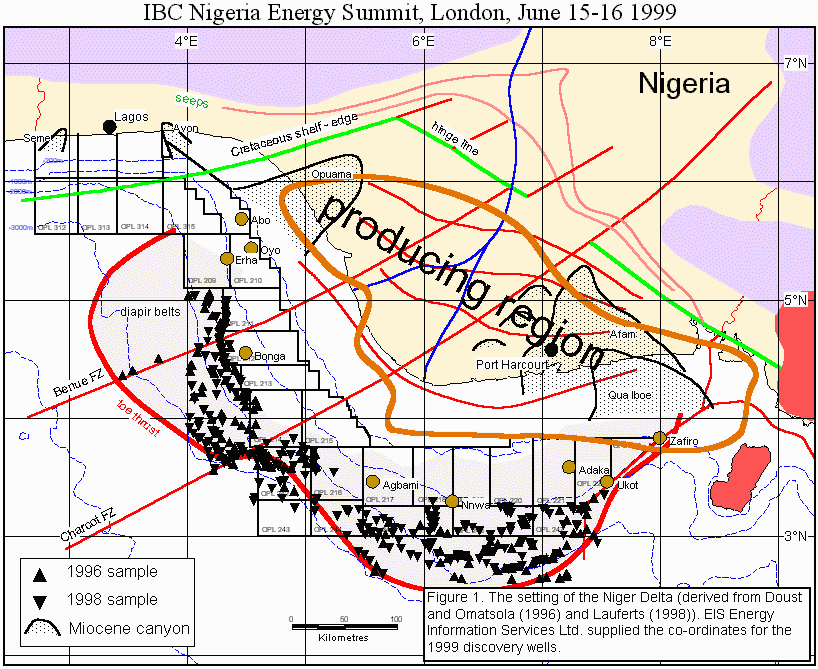
Figure 1
The setting of the Niger Delta (derived from Doust and Omatsola (1996) and Lauferts (1998)). EIS Energy Information Services Ltd. supplied the co-ordinates for the 1999 discovery wells.

Figure 2
Averaged cross-section through the Niger Delta (derived from Thomas, 1995).
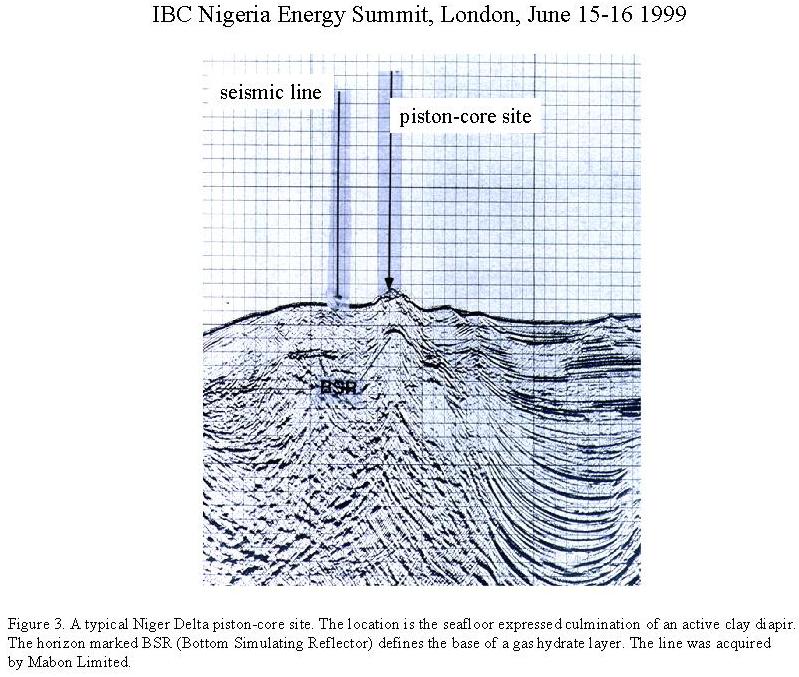
Figure 3
A typical Niger Delta piston-core site. The location is the seafloor expressed culmination of an active clay diapir. The horizon marked BSR (Bottom Simulating Reflector) defines the base of a gas hydrate layer. The line was acquired by Mabon Limited.
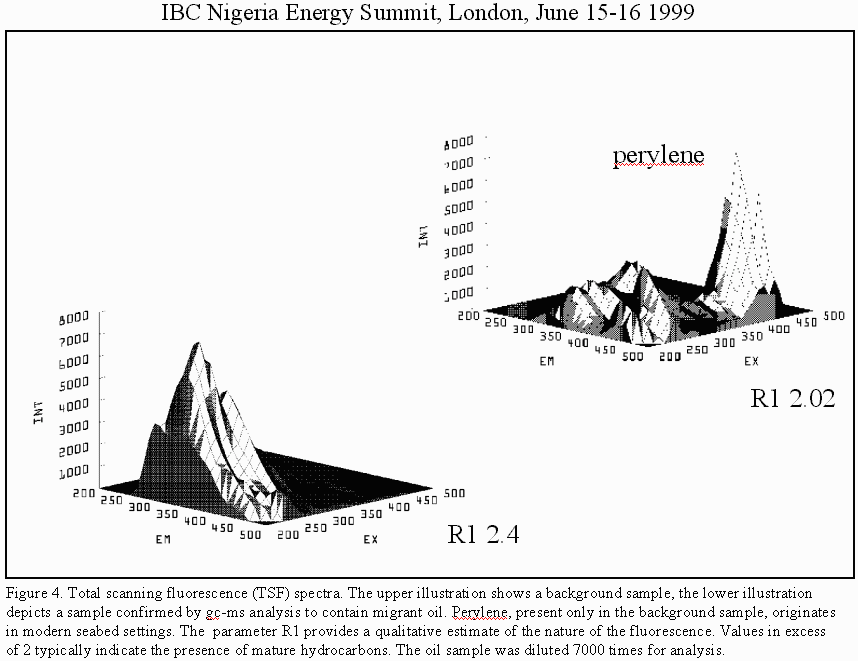
Figure 4
Total scanning fluorescence (TSF) spectra. The upper illustration shows a background sample, the lower illustration depicts a sample confirmed by gc-ms analysis to contain migrant oil. Perylene, present only in the background sample, originates in modern seabed settings. The parameter R1 provides a qualitative estimate of the nature of the fluorescence. Values in excess of 2 typically indicate the presence of mature hydrocarbons. The oil sample was diluted 7000 times for analysis.

Figure 5
Gas chromatograms. The upper illustration shows a background sample, the lower illustration depicts a biodegraded macroseep oil. Bacterial by-product compounds collectively termed UCM (Unresolved Complex Mixture) create the hump shaped area below the base of the trace.

Figure 6
Ethane/ethene and TSF maximum intensity cross-plot. The macro and microseep oil samples have TSF intensities in excess of 1,000,000 units. Possible migrant thermogenic gases form the small population of samples grouping around the 10:1 ethane/ethene line.
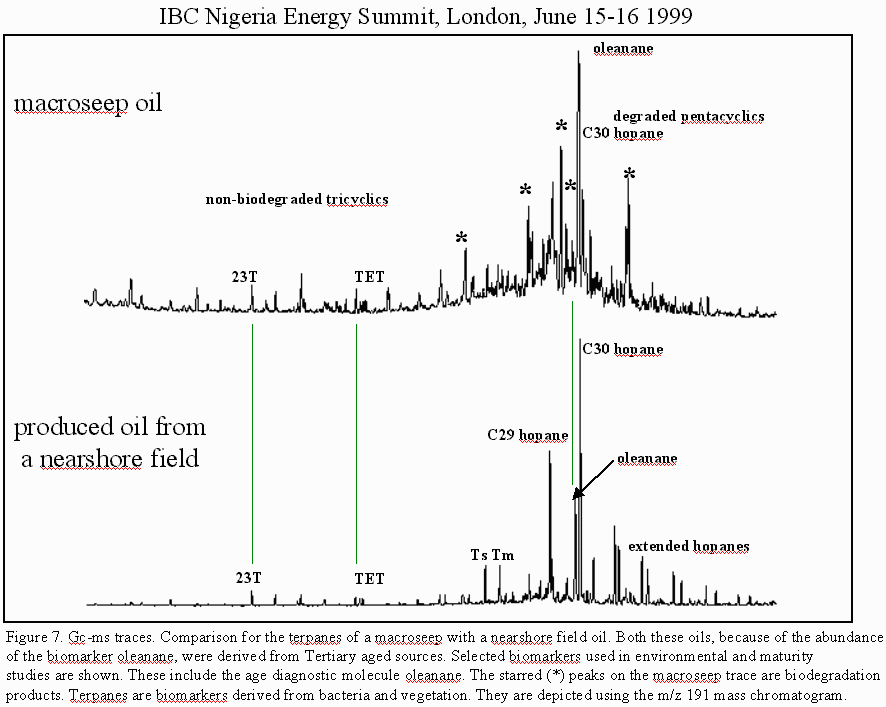
Figure 7
Gc-ms traces. Comparison for the terpanes of a piston-core macroseep with a nearshore field oil. Both these oils, because of the abundance of the biomarker oleanane, were derived from Tertiary aged sources. Selected biomarkers used in environmental and maturity studies are shown. These include the age diagnostic molecule oleanane. The starred (*) peaks on the macroseep trace are biodegradation products. Terpanes are biomarkers derived from bacteria and vegetation. They are depicted using the m/z 191 mass chromatogram.
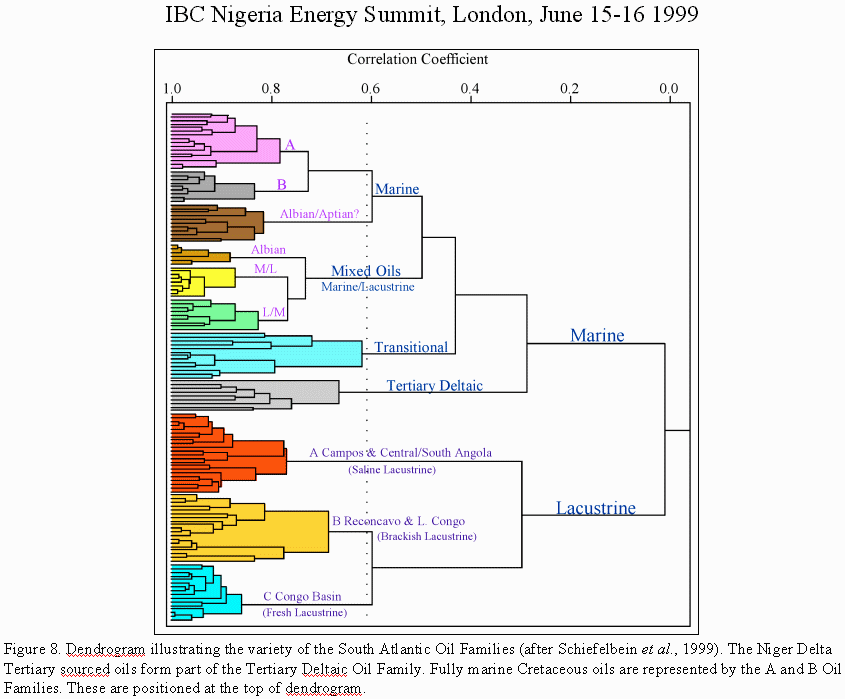
Figure 8
Dendrogram illustrating the variety of the South Atlantic Oil Families (after Schiefelbein et al., 1999). The Niger Delta Tertiary sourced oils form part of the Tertiary Deltaic Oil Family. Fully marine Cretaceous oils are represented by the A and B Oil Families. These are positioned at the top of dendrogram.
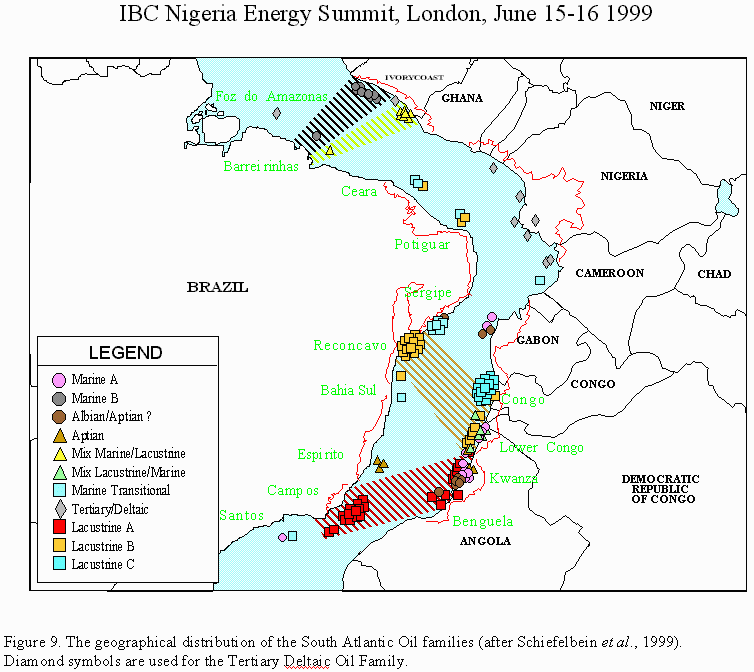
Figure 9
The geographical distribution of the South Atlantic Oil families (after Schiefelbein et al., 1999). Diamond symbols are used for the Tertiary Deltaic Oil Family.
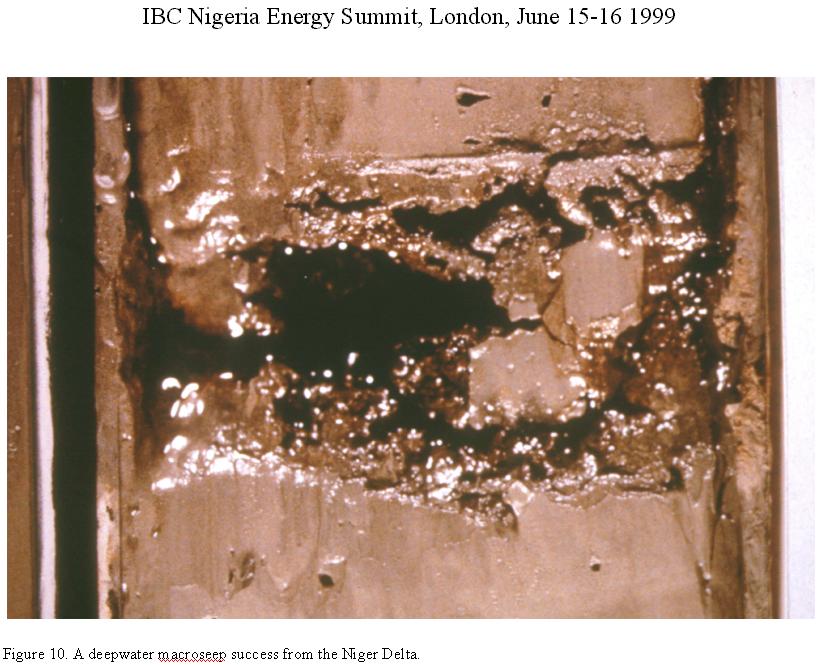
Figure 10
A deepwater macroseep success from the Niger Delta.
Contact Us
TDI-Brooks International, Inc.
14391 S. Dowling Road
College Station, TX 77845
Email: info@tdi-bi.com
Phone: +1 (979) 693-3446